
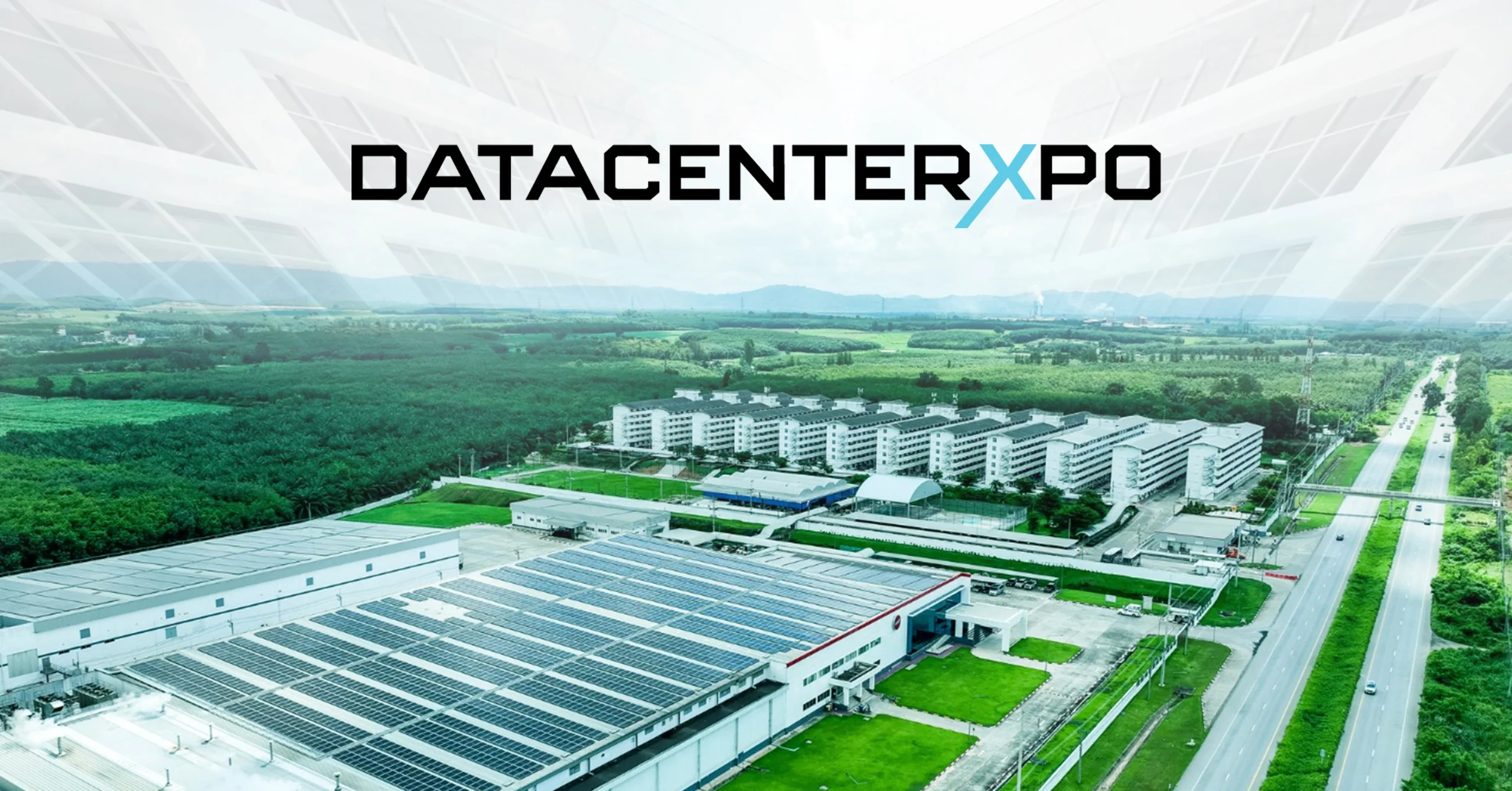
Integrating renewable energy into an existing data centre comes down to four complementary routes: off-site power purchase agreements (PPAs) that contract clean electricity at scale, on-site solar or wind where land allows, battery energy storage to cover intermittency, and a microgrid controller that blends these sources with the grid. No single method delivers round-the-clock clean power on its own. The working model pairs renewables with storage and the grid so the facility never trades uptime for sustainability. The current frontier is 24/7 carbon-free matching: backing every operating hour with clean generation rather than offsetting annual consumption with credits.
Data centre electricity demand is rising faster than almost any other load on the planet, and the people who run these facilities now carry a dual mandate to keep mission-critical infrastructure online to the second, and decarbonise it. Renewable energy data centre integration sits at the centre of that tension. The good news is that the playbook has matured fast, and most of it can be applied to facilities that already exist, not just greenfield campuses.
Why are data centres turning to renewable energy now?
Data centres are turning to renewable energy because their electricity appetite is exploding and the grid alone cannot supply it cleanly or fast enough. The International Energy Agency projects that global data centre electricity consumption will more than double from 415 TWh in 2024 to roughly 945 TWh by 2030, with artificial intelligence as the primary driver. That is close to 3% of projected global electricity use by the end of the decade.
Three forces converge here. First, AI training and inference workloads are pushing power density to levels the older grid was never built for. Second, sustainability commitments, net-zero targets, hourly clean-energy pledges, and investor pressure have moved from marketing to procurement. Third, renewables are now often the cheapest new electricity available, so the business case and the climate case point the same way. According to the IEA’s Electricity 2026 outlook, renewables, natural gas and nuclear together are expected to meet all additional global electricity demand between 2026 and 2030, and renewables already supply about 27% of data centre electricity, a share the IEA expects to reach 50% by 2030.
What are the main ways to power an existing data centre with renewable energy?
There are four core methods, and serious operators combine them rather than choosing one:
- Off-site power purchase agreements (PPAs). The dominant model. The operator signs a long-term contract for clean electricity from a dedicated wind or solar farm, delivered through the grid. PPAs let a facility secure gigawatt-scale renewables without needing land on site.
- On-site generation. Rooftop and adjacent-land solar (and occasionally wind) feeds clean power directly into the facility, cutting grid charges and improving resilience. It rarely covers full load on its own — a solar plant needs roughly 10,000 square feet per 100 kW, per engineering firm Ramboll — but it is a meaningful contributor.
- Battery energy storage systems (BESS). Storage has shifted from an optional add-on to a core reliability asset. It stores surplus renewable output and discharges it when the sun sets or the wind drops, smoothing the gap between variable supply and constant demand.
- Microgrids. A control layer that ties on-site generation, storage, and the grid into a single, intelligently managed system that can run grid-connected or island itself during an outage.
For an existing facility, the lowest-friction starting point is usually a PPA layered onto a behind-the-meter solar-plus-storage retrofit where the site permits it.
How do power purchase agreements work for data centres?
A power purchase agreement is a long-term contract in which a data centre operator buys electricity from a renewable project at an agreed price, locking in a clean supply and a hedge against volatile energy costs. PPAs come in several shapes, and the structure matters more than ever:
- Physical PPAs deliver actual electrons to a specific facility, sometimes via a direct private wire that bypasses grid charges entirely.
- Virtual (financial) PPAs settle financially against a market reference price and let one contract cover operations across many regions — Microsoft has used virtual PPAs spanning more than a dozen countries.
- Sleeved PPAs route renewable power through a utility intermediary that “sleeves” it to the buyer.
The scale is striking. Amazon has become the world’s largest corporate renewable energy purchaser, with around 20 GW contracted; Microsoft has signed landmark renewable PPAs measured in the tens of gigawatts. Crucially, the market is moving away from annual renewable energy credit (REC) matching toward hourly, time-matched delivery — because an annual average can look clean while the facility still draws fossil power at 2 am.
How do you handle renewable intermittency without risking uptime?
You handle intermittency by pairing renewables with storage and firm backup so clean generation is available the moment the data centre needs it, not just on average. A data centre runs around the clock with fairly steady demand, while solar and wind output swings with the weather — that mismatch is the central engineering problem.
The solutions stack in layers. Battery storage absorbs midday solar surplus and releases it through the evening peak; utility-scale storage installations rose 27% in the third quarter of 2025 as this need intensified. Hybridising sources — combining solar with wind, hydro or geothermal — smooths the supply curve because they rarely fall idle at the same time. Where a region’s grid can’t yet deliver enough firm clean power, operators increasingly turn to “clean firm power” bundles: TotalEnergies, for example, packages renewables with battery storage and flexible gas generation to guarantee 24/7 reliability for data centre clients.
This is the essence of 24/7 carbon-free energy matching — guaranteeing that clean generation backs every hour of operation, rather than offsetting annual totals with credits. That “every hour, not every year” standard is now the benchmark serious operators design toward, and the Google–AES partnership below shows what it looks like in practice.
Case study: Google’s 24/7 carbon-free data centres in Virginia
Google’s experience powering its existing Virginia data centres shows how the layered model works in practice. In 2021, Google and the energy company AES signed a first-of-its-kind 10-year contract under which AES became the sole supplier of carbon-free energy for those facilities — engineered to keep them 90% carbon-free measured on an hourly basis, not just as an annual average.
The deal deliberately avoided relying on any single technology. AES assembled an approximately 500 MW portfolio of wind, solar, small-scale hydro and battery storage, drawn from its own projects and third-party developers within the same regional grid, underpinned by around $600 million of investment. To get the mix right, AES built a portfolio-optimisation tool that analysed thousands of possible combinations to maximise hourly carbon-free coverage while controlling cost and risk.
The takeaway for any operator: near-round-the-clock clean power on an existing site comes from blending multiple renewable sources with storage and the grid — and treating the energy mix as an optimisation problem, not a one-off purchase.
What are the biggest challenges of retrofitting renewables into existing facilities?
The biggest challenges are land, storage economics, grid interconnection and the non-negotiable demand for uptime. Retrofitting an operational data centre is harder than designing a green one from scratch, and the obstacles are concrete:
- Land and siting. On-site solar and wind need space that an existing urban or suburban facility often doesn’t have. A 300 MW site would require an enormous footprint to self-generate from solar alone.
- Storage cost and footprint. Batteries remain capital-intensive and physically large, yet they are the primary defence against intermittency — so the cost is hard to avoid.
- Interconnection queues. Connecting new renewable capacity or a behind-the-meter project to the grid can take years, lagging the pace of data centre demand. This is exactly why operators are building behind-the-meter “energy parks” to bypass sluggish queues.
- Reliability risk. Any integration must preserve the facility’s uptime guarantees. A microgrid with a master controller, capable of islanding during grid disturbances, is the architecture that lets operators add renewables without adding outage risk.
None of these is a reason to delay — they are a reason to sequence the retrofit carefully, usually starting with a PPA and a phased storage and microgrid build.
How is Saudi Arabia powering its data centres with renewables?
Saudi Arabia is positioning itself as the Middle East’s green data centre hub by pairing one of the world’s most aggressive solar build-outs with a fast-growing data centre sector. Under Vision 2030, the Kingdom aims to generate 50% of its electricity from renewables by 2030, with a National Renewable Energy Program targeting around 40 GW of solar capacity and anchor projects such as the 2.6 GW Al Shuaibah solar complex and the 400 MW Dumat Al Jandal wind farm. The Kingdom has surpassed 10 GW of installed renewable capacity, with roughly 31 GW more in development. That clean-power pipeline is meeting real digital demand. Saudi Arabia’s green data centre market is forecast to grow at around a 32% compound annual rate through 2030, with the Kingdom’s IT load capacity expected to cross 1.5 GW by 2030 across Riyadh, Jeddah and the Eastern Province. Landmark deals NEOM’s partnership with DataVolt on a multi-billion-dollar AI campus, and major hyperscaler commitments are being built with sustainability and the Saudi Green Initiative’s 2060 net-zero target in mind.