The biggest cybersecurity trends discussed in UAE summits in 2026 are AI-driven security, identity-centric defence, OT and critical-infrastructure protection, SOC modernisation, cloud and zero trust, threat intelligence, and regulatory compliance. Exito Events puts all of these on the agenda at the Cyber Security Summit UAE. It is the 36th edition of Exito’s cyber series, and it runs in Dubai on 3 November 2026 with 200+ senior security leaders. Above all, these themes reflect one reality: regional attack volume is surging. In fact, the UAE Cybersecurity Council recorded up to 700,000 attempted attacks a day during heightened tension in early 2026.
For any Gulf security leader, these trends describe the threats already on the network. So this article breaks down the cybersecurity trends discussed in UAE summits one by one, explains who the summit serves, and grounds every theme in real 2026 data.
What is the Cyber Security Summit UAE 2026?
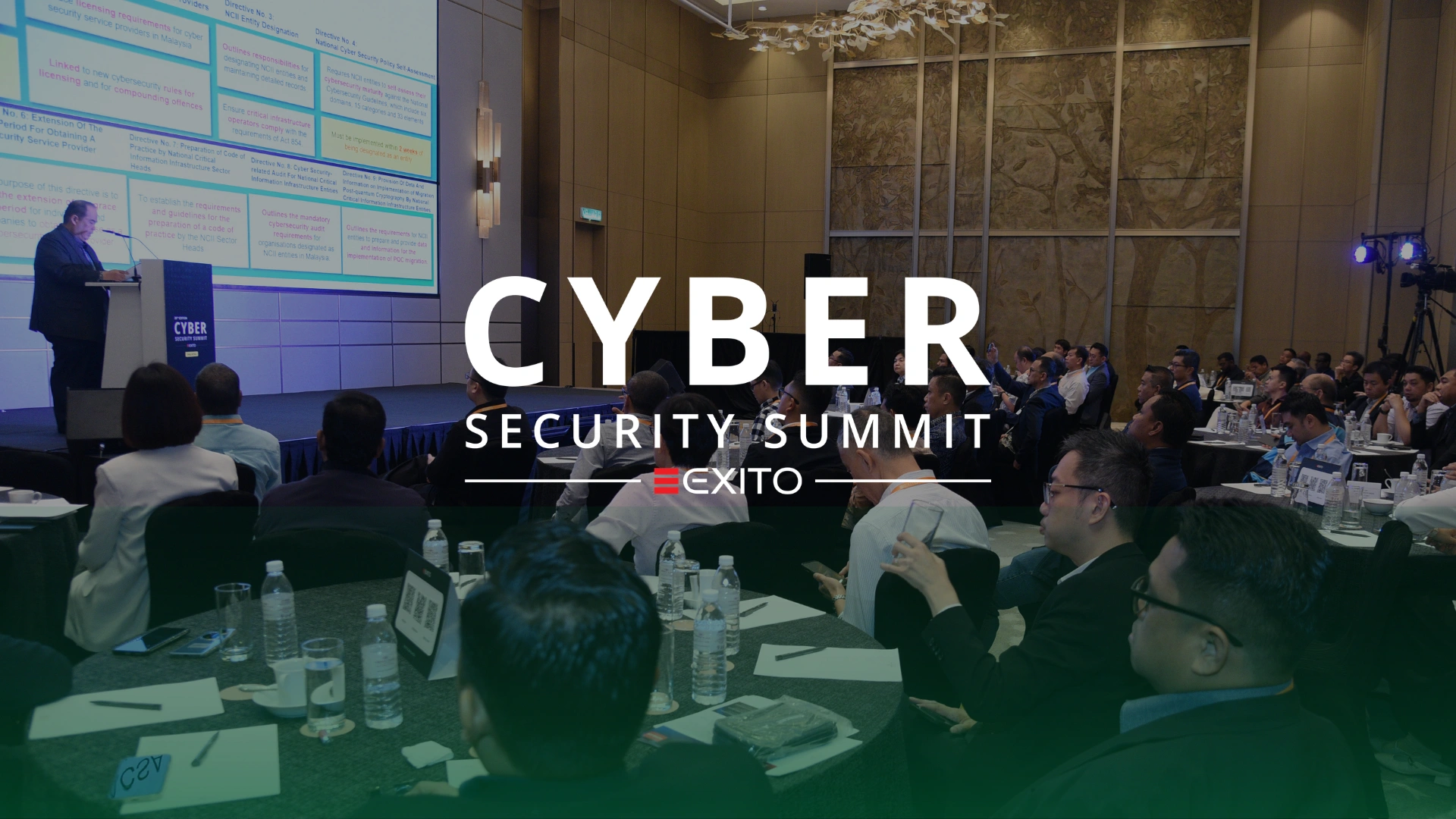
The Cyber Security Summit UAE 2026 is a senior B2B cybersecurity conference from Exito Events. It runs in Dubai on 3 November 2026 as the 36th edition of Exito’s Cyber Security Summit series. Moreover, it connects 200+ senior cybersecurity leaders — CISOs, CIOs, heads of security, risk leaders, government stakeholders, and technology decision-makers.
The agenda stays deliberately practical. Because of that focus, sessions tackle real-world problems rather than basics. In short, it is a strong venue to benchmark your roadmap against regional peers and to meet the vendors who serve this market.
What cybersecurity trends are discussed in UAE summits?
These are the cybersecurity trends discussed in UAE summits this year. The agenda groups them into seven themes, shown below. Each one maps to a problem UAE leaders must solve right now.
The urgency comes from the local threat environment. According to the UAE Cybersecurity Council, attack attempts jumped from roughly 200,000 a day to between 500,000 and 700,000 a day during regional tension in Q1 2026. As a result, every session in Dubai starts from a position of pressure.
| Featured discussion | What is driving it |
| Spend vs. outcomes | Rising budgets, rising breaches; tool sprawl and weak visibility |
| AI-driven security | AI now powers both attack and defence |
| SOC modernisation | Alert overload, false positives, fragmented tooling |
| Identity-centric security | Identity is the top attack vector; MFA bypass, non-human identities |
| OT & critical infrastructure | IT/OT convergence; SCADA risk; ransomware on OT |
| Cloud & zero trust | A wider attack surface; sovereign infrastructure |
| Regulatory compliance | Tighter reporting rules; resilience as a board mandate |
Why are CISOs rethinking the gap between security spend and outcomes?
CISOs are rethinking this gap because budgets keep rising while breaches keep getting worse. So the summit keynote tackles the disconnect head-on. It shows how tool sprawl and weak visibility undermine results. It also shows how leading UAE CISOs now manage exposure, quantify risk, and prove security ROI.
This shift is structural, not cosmetic. For example, UAE strategy increasingly favours attack-path modelling and risk-prioritised operations through the Risk Operations Centre (ROC) model. The findings in the WEF Global Cybersecurity Outlook 2026 echo this point.
How is AI changing both attacks and the SOC?
AI is reshaping the UAE threat landscape on both sides. Therefore the summit splits it into two discussions: AI-driven attacks, and the modernisation of the overwhelmed SOC.
On the offensive side, attackers use AI to automate reconnaissance, scale phishing, and sharpen credential attacks:
- 94% of leaders call AI the most significant force reshaping cybersecurity in 2026 (WEF).
- 87% flag AI-related vulnerabilities as the fastest-growing risk category this year.
On the defensive side, AI answers SOC overload — too many alerts, too many false positives, too many tools:
- 77% of organisations now deploy AI for security, mostly for phishing detection and intrusion response (WEF).
- Meanwhile, the share assessing AI tool security before deployment nearly doubled, from 37% to 64%.
In short, “normalising AI adoption” is the core theme. Delegates want to secure the AI they already run, and they want to use it to modernise the SOC.
Why has identity become the primary attack vector?
Identity is now the primary attack vector because attackers steal credentials instead of breaking the perimeter. So the summit’s identity-centric session looks at how they do it. For instance, they bypass MFA, exploit session tokens, and target non-human identities such as service accounts and APIs.
The regional urgency is clear. Indeed, Exabeam found the Middle East has the strongest insider concern globally, and 70% of professionals name internal actors as the primary threat. Because credential compromise now drives so many breaches, identity assurance becomes a foundation of security posture rather than a simple IT control.
How are UAE operators securing OT and critical infrastructure?
UAE operators are securing OT by closing the gap that opens as IT and operational technology converge. As energy, aviation, and logistics systems join enterprise networks, they inherit enterprise threats without enterprise defences. So the summit’s critical-infrastructure panel addresses the fallout.
The panel covers the real risks first: SCADA vulnerabilities, ransomware on OT, and poor asset visibility. Then it turns to the response. For example, operators segment IT from OT and gain real-time visibility. Above all, they plan to keep essential services running through disruption rather than assume they can prevent every attack.
How do cloud, zero trust and sovereign infrastructure fit together?
Cloud security, zero trust, and sovereign infrastructure form the summit’s answer to a wider, harder-to-control attack surface. As UAE organisations move workloads to the cloud, zero trust replaces the old perimeter. Meanwhile, sovereignty decides where sensitive data and control actually sit.
The Help AG State of the Market Report 2026 shows a clear shift toward sovereign cloud across the UAE and Saudi Arabia. Once a compliance footnote, sovereignty now shapes architecture, security operations, and AI governance. Therefore zero trust matters more than ever: verify every request, assume breach, and limit lateral movement. Together, both let organisations adopt cloud and AI without losing control.
How do threat intelligence and regulatory compliance feature?
Threat intelligence and regulatory compliance run across the whole agenda, so the summit treats both as core executive topics. First, threat intelligence turns raw signal into action — teams share indicators, prioritise by real risk, and feed intelligence into detection. Because attacks now move at machine speed, late intelligence is useless intelligence.
Second, regulatory compliance keeps tightening. For example, UAE rules increasingly demand data-protection measures and prompt incident reporting, and cyber-insurance terms follow suit. As Gartner’s 2026 guidance underlines, resilience is now a board mandate rather than a technical afterthought.
How do I attend the Cyber Security Summit UAE 2026?
You can attend by registering on the event page. The summit suits senior security and technology decision-makers. So if you want to benchmark your plan against the cybersecurity trends discussed in UAE summits, it belongs on your calendar. Register on the Cyber Security Summit UAE page, through the Delegate and Sponsor Enquiry forms.